The wheel of the cart had come loose, and it rolled across the cobblestones until it stopped at the hooves of his horse. The boy ran after it, and Lars dismounted before the child could get too close. He bent down, picked up the cart, and examined the damaged wheel. It just came off, he said calmly.
The boy stopped in front of him. It is mine. Lars lifted his eyes, and the world seemed to stop. The boy had his eyes.
Not a vague similarity. Not a coincidence. They were the same dark eyes, the same way of looking silently before trusting. There was something in the line of the forehead, in the quiet seriousness of the child’s face, that struck Lars with a force he could not explain.
He handed the cart back slowly. What is your name? The boy hugged the toy to his chest. David.
Lars felt the name open a crack in his chest. Then a sharp voice called from the stall. David, come here. Lars turned.
The woman with the dark scarf was walking toward the boy, placing herself between him and the world. The scarf slipped. Lars stopped breathing. Inas.
She went pale. Louise, who had stepped closer, understood immediately that this woman was not a stranger. Inas looked at Lars the way one looks at a wound that never closed. Do not call me that.
Her voice was low but firm. Lars took a step toward her. You are alive. Inas pressed her fingers against David’s shoulders.
No, thanks to you. The sentence hit him. I thought you believed what you wanted to believe. Lars looked at the child, then back at her.
There were too many questions, too many years, too much anger mixed with something that hurt more than anger. Who is he? Inas raised her chin. My son.
Lars’s voice dropped. Whose son? Inas’s face hardened. For six years she had rehearsed many possible answers, but nothing had prepared her to stand before him again.
She looked at the child. His father is dead. Lars felt the air grow heavy. David looked at his mother without understanding why her hands trembled.
Louise moved closer. Lars, who is this woman? He could not answer. The wife he had mourned as dead was alive, living poorly, hidden, with a child who had his eyes.
And when she looked at him, she did not look guilty, she looked afraid. Inas stepped back. Do not come near us again. Inas, I need to understand.
What you needed to understand was six years ago. The old woman took a basket with firm hands. Nanna, let us go. Lars noticed the false name, the caution, the fear.
Nanna. Inas no longer used her name. Why would a woman who supposedly fled with a lover and stolen jewels live hidden in a forgotten village, selling eggs and herbs at the edge of a market? Where was the lover?
Where was the money? Where was the life his mother had told him she had chosen? Inas took David’s hand and walked away without looking back. Lars stood motionless in the noise of the market.
Louise studied him, hurt and confused. Lars, tell me who she was. He swallowed. My wife.
Louise opened her eyes wide. Your wife is dead. Lars looked toward the place where Inas had disappeared. That is what I believed.
The coachman announced the horse was ready, but Lars did not move. Something inside him, something buried for six years under pride, pain, and obedience, began to wake. If Inas was alive, someone had lied. If she had been forced to hide under another name, with a child who might carry his blood, then the story of betrayal was not simple, as his mother had made him believe.
When he finally mounted his horse, he made a decision. He would say nothing to his mother, not yet. Lars did not return peacefully to Alstrup. The rest of the journey, Louise tried several times to speak, but he answered with short words.
His body was on the road beside the carriage and the horses, but his mind remained in Sankt Bjørn before a woman with a dark scarf and a child whose eyes resembled his own too much. Inas was alive. There were no jewels, no lover, no comfortable life built on betrayal. There was only an old cloth on the ground, dried herbs, eggs, vegetables, and a child hiding behind his mother.
That image haunted him all night. When he arrived at Alstrup, Margrethe received him in the salon with her usual calm. The journey took longer than expected, she said. One of the horses had trouble.
And Louise’s father? We speak tomorrow. Margrethe studied him for a few seconds. Lars kept his face calm, though inside he felt every word could betray him.
I understand. Then rest. You cannot afford distractions these days. Lars bowed his head and withdrew.
He said nothing about Sankt Bjørn, nothing about Inas, and above all nothing about the child. At dawn he made a decision. He announced that he needed to inspect a trade route in the mountain region for the wine estate. He did not allow Erik or any of the men close to his mother to accompany him.
He took only one horse anda small bag. The road to Sankt Bjørn seemed longer than the first time. As he rode up the mountain, Lars repeated to himself that he needed answers, but deep down he knew he also feared finding them. When he reached the market, the herb stall was gone.
He asked discreetly a woman selling bread. I am looking for an elderly woman named Rigmor. She sells eggs and herbal remedies. The woman looked at him with suspicion.
She lives at the edge of the village by the forest. But if you are coming to collect something, you have the wrong door. The old woman has nothing but hens and patience. Lars thanked her and followed the directions.
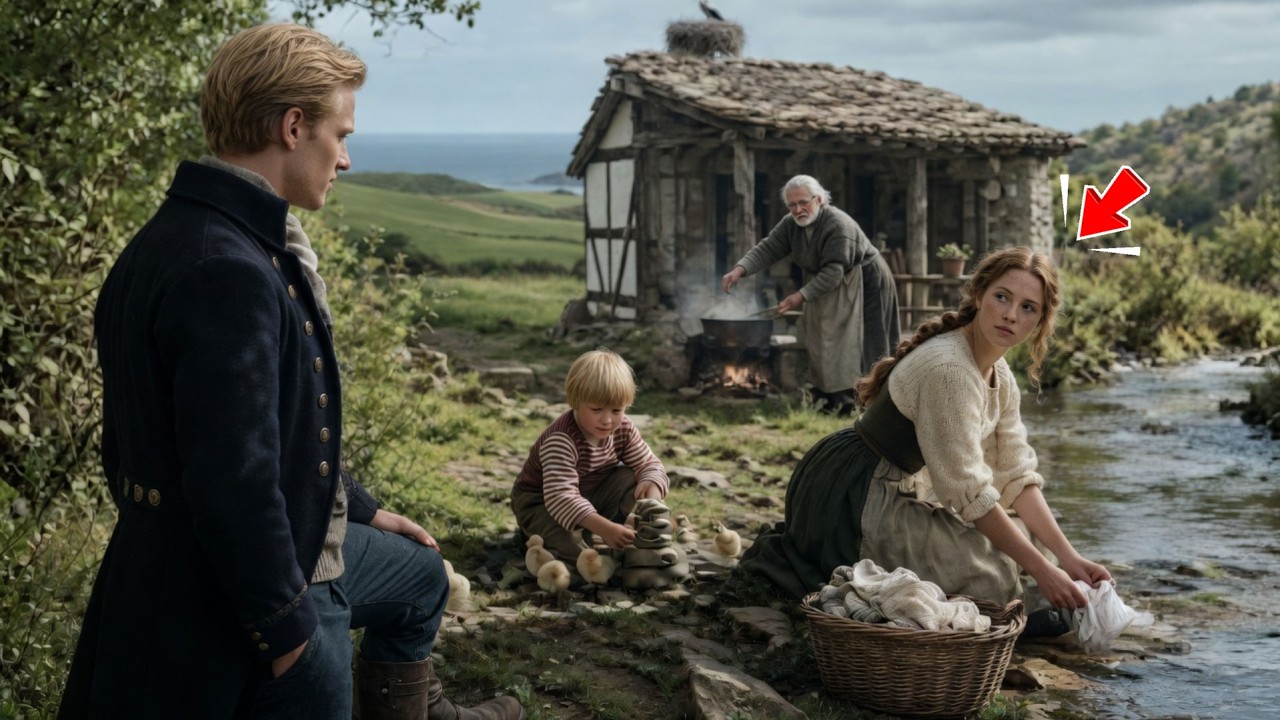
Rigmor’s house stood at the end of a narrow path where stones mixed with wet mud. It was low, with worn walls, a crooked roof, anda small herb garden overgrown with weeds. Nothing about that place spoke of lying or wealth. Lars stopped before the door.
Before he could knock, he heard Inas’s voice inside. David, do not run with that in your hand, then a short child’s laugh. The sound tightened his chest. He knocked.
Silence fell immediately. The door opened a crack. Rigmor appeared on the other side, small and thin with tired but steady eyes. When she recognized him, she did not smile.
You should not be here. I need to speak with Inas. There is no Inas here. Lars held her gaze.
Then I need to speak with Nanna. Rigmor narrowed her eyes. You did not come looking for her when she was dying. Why do you come now?
The question left him motionless. Then Inas came forward. She wore a simple apron, her hands dusted with flour. When she saw him, her face closed.
I already told you not to come back. I have not come to take you anywhere. Your presence is already too much. Lars looked around the poor house, the henhouse, the children’s clothing drying by the fire, the small pot on the stove.
All this was the cruelest answer to six years of lies. I just want to understand. Inas laughed bitterly. Understanding does not change what happened.
Rigmor opened the door a little wider. Let him come in for a moment. If he has come all this way, he can at least hear what I saw. Inas looked at her tensely.
Rigmor, I do not want to tell what is not my story, said the old woman. But there are things he needs to know. Lars stepped inside. David sat by the fire repairing his wooden cart with a string.
When he saw Lars, he became still. He did not smile, but he did not hide either. The house smelled of smoke, dry bread, and herbs. Rigmor pointed to a chair.
Sit. Lars obeyed. The old woman did not avoid the subject. Six years ago, after a terrible storm, I went down to the river to look for branches washed up by the water.
There I found her. Inas lowered her eyes. Rigmor continued. She was caught between roots, covered in mud, her clothes torn, her body full of bruises.
She had a fever. She could barely breathe. Lars felt his stomach clench. She was alone, alone and pregnant.
The word fell into the room like a stone. Lars looked at David. The boy still played with the cart, unaware of the weight of the silence. Rigmor placed her hands on the table.
I brought her here. She lay for days between life and death. In her fever, she cried out a name again and again. Lars could barely speak.
What name? The old woman looked at him without mercy. Yours. Inas closed her eyes, as if that confession humiliated her more than any insult.
Lars felt something inside him break. For six years he had imagined Inas fleeing with another man. He had imagined her betrayal, her contempt, her shameful death. He had never imagined her calling his name while she bled in a poor bed.
I did not know, he said. Inas opened her eyes. Not knowing was easier for everyone in that house. Lars had no answer.
Rigmor lowered her voice. I do not know what happened before the river brought her here. That she must tell herself, if she ever wants to. But I know what I saw.
I know she was pregnant. I know she was afraid. And I know that when she woke, the first thing she asked was that no one must find her. Lars looked again at David.
Almost six years. The timing fit with a precision that hurt. He, Inas interrupted him. Do not finish that question, Lars.
No, you can look at his eyes and do the math. But being a father is not discovering a resemblance after six years. Lars lowered his head. She was right.
David stood up and went to his mother, grasping her skirt with one hand. Inas stroked his head without taking her eyes off Lars. We have a life here. Poor.
But ours. Lars looked at the worn table, the herbs, the bread, the old woman who stood as guardian of this house. Why did you not come back? Inas looked at him with a cold pain.
Because the last time I tried to come back to you, I was nearly killed. Lars felt a chill. Who? She did not answer.
Rigmor placed a hand on Inas’s shoulder. Enough for today. Lars understood he would get no more. He stood slowly.
I will not tell anyone you are alive. Inas looked at him doubtfully. Not even your mother. Lars’s silence was answer enough.
For the first time, something resembling doubt crossed Inas’s eyes. Lars walked toward the door. Before he left, David looked at him. Ha.
Lars. Lars stopped. The boy held up the cart. The wheel keeps falling off.
Inas tensed. Lars looked at the toy, then at the boy. I can fix it another day, if your mother allows it. David looked at Inas.
She said neither yes nor no. Lars returned to Sankt Bjørn three days later. This time he came not with questions, but with a small toolbox. Inas watched him from the door and pressed her lips together.
Now you come as a carpenter. I only promised to fix a wheel. You promise many things. Lars received the blow in silence.
David appeared behind her with the cart in his hands. He did not approach immediately, but his eyes showed a curiosity he could not hide. Inas looked at her son, then at Lars. Only the wheel.
Then you leave. Okay. Lars sat on a bench underthe eaves. David placed the cart beside him and stood watching every move.
The wheel was broken inside. Lars took longer than necessary. His hands were used to reins, paper, hunting weapons, not so skilled with a small piece of toy. Still, he worked carefully.
David crouched beside him. Not like that. Lars looked at him. No, then it falls off again, and the string has to go there.
Lars handed him the piece. Then teach me. The boy warmed. Then he pointed with one finger.
Here. Inas watched from the door. The scene was simple. A man fixing a toy and a child giving serious instructions.
But for her it was more dangerous than any argument. David had never had a father nearby, and Lars was filling, without knowing it, a space she had kept closed to protect him. When the cart was finished, David pushed it across the ground. The wheel turned well.
The boy smiled. It was not a big smile, but it was enough to make Lars feel a stab in his chest. Thank you, David murmured. Lars swallowed.
Take care of it. It is still fragile. Inas understood he was not only talking about the cart. Inthe following weeks, Lars returned several times.
Always with different excuses at Alstrup. Always careful not to be followed. In Sankt Bjørn he did not ask too much and did not try to command. He observed.
He saw David help Rigmor with the hens. He saw him carry small bundles of herbs to his mother. He saw him frown. And concentrate just like he himself did as a child.
He saw him stand still before strangers, but observe everything with deep attention. What gesture confirmed, blood already screamed. David was his son, but Inas would not give him to him simply because he had learned to count. One afternoon, while Rigmor was inside the house and David played near the henhouse, Lars approached Inas.
When was he born? she said, continuing to wash roots in a bucket. In winter. What day, Inas?
She looked up. Do not turn my son into a calculation. Lars took a deep breath. I need to know.
You want to know. That is different. Inas, if it is my son. She let the roots fall into the water and stood up.
If it is your son, you will come with a surname, a lawyer, an order, and decide that blood weighs more than six years of sleepless nights? Lars clenched his fists. I will not take him from you. That is what everyone says who has power, before they use it.
The sentence hurt him, but he did not defend himself. Inas took a step closer. Her voice was not afraid, but held back anger. You can suspect the child is yours, but I raised him through the years you were not here.
I was there when he had fever. I was there when he asked why he had no father. I was there when he cried because other children teased him. Lars lowered his eyes.
What did you tell him? That his father was dead. He closed his eyes. Inas continued.
For me, the man who promised to protect me died that night too. Lars felt there was no truer blow than that. David came running with the cart. Mother, look.
Inas turned instantly and softened her face for her son. Lars watched that transformation. He understood then that Inas was not cold. She was a woman who had learned to close doors, because behind them she kept the only thing she could not lose.
David looked at Lars. Will you come tomorrow? Inas became still. Lars did not answer immediately.
He looked at Inas and asked permission without words. She turned her gaze away. I do not know, he said to the boy. But if I come, I will bring a spare wheel.
David nodded seriously. Then come. That evening, after Lars had left, David sat by the fire with the cart on his lap. Mother.
Inas stirred the soup. Yes, dear? Lars lives very far away. She paused for a moment.
And he might come tomorrow. Inas closed her eyes for a moment. Maybe. David smiled slightly.
I like him. Inas felt those three words hurt more than any accusation. Rigmor from her chair looked at her with a sad tenderness. Children notice when someone wants to stay.
Inas kept staring at the soup. That is what scares me. Because David was beginning to expect, and she knew there was no crueler wound for a child than waiting for someone who might not come back. Lars did not return to Sankt Bjørn with grand promises.
He returned with nails, wood, bread, medicine, and silence. The first time, he found Rigmor placing a bucket under a leak. The roof will not hold another winter, he said. The old woman looked at him ironically.
And you will order it to hold? No, I will repair it. Inas came out when she heard him. We do not need charity.
It is not charity. What is it then? Lars looked at the damaged roof. A roof repair.
A repair. Rigmor let out a dry laugh. You can at least recognize one. Inas wanted to refuse, but that night rain had fallen onto David’s bed.
In the end she said nothing. Lars climbed onto the roof and worked for hours. He did not do it elegantly. He got dirt on his shirt, hit his fingers, was almost slipped twice.
David watched from below with open admiration. When he was done, Inas offered him water. Thank you, he said. It is water.
Not a reward. I know. She almost smiled, but stopped herself. Days later, Lars helped push the vegetable cart when a wheel sank into the mud on the way to the market.
Another afternoon he chopped wood for Rigmor. He also repaired the henhouse door, which swung open in the wind and let the hens escape. He did not talk much. That helped.
Inas trusted actions more than words. One morning, when she gathered eggs, she found coins hidden under the grain cloth. She froze. She went out to the veranda, where Lars was adjusting the fence.
This is yours. He looked at the coins in her palm. I thought they could be used for flour. I sell.
I did not mean to offend you, but I did. Lars put down the tools. Inas, I only wanted to help. Then listen before you help.
We are poor. Yes, but I do not want my pain to become a debt. Lars took the coins back without arguing. I will not do it again.
She looked at him, surprised by his lack of pride. That is all. If something is missing, I will not repeat it. Inas did not know how to answer.
This man was not the Lars from before. Or maybe he was, and she only saw him from a different place. Before, he belonged to a vast estate, a strict mother, a name that weighed more than the truth. Now he stood there with mud on his boots, learning not to impose, not even his help.
David began to wait for him at the gate. He did not admit it. He sat with his cart near the gate and pretended to play. But when he heard the horse, he lifted his head too quickly.
Lars never ran to him. He always approached slowly, as if he understood that a child’s trust should not be frightened away. One afternoon David handed him a branch. It looks like a sword.
Lars took it seriously. A sword needs balance. Can you use a sword? A little.
Can you teach me? Inas tensed in the kitchen garden. Lars saw her. When your mother allows it.
David frowned in irritation. Mothers always worry. Inas answered without raising her voice. Because someone has to.
Lars lowered the branch. Your mother is right. David looked at him, surprised. You are not saying I am big?
Being big also means obeying when someone is taking care of you. The boy thought for a few seconds, then went back to playing. Inas lowered her eyes to the plants. Something in her chest loosened slightly.
The hardest trial came on a cold, windy night. David developed a fever after sunset. At first Inas thought it was tiredness, but soon the boy began to shake. Rigmor made herbal teas.
Inas placed wet cloths on his forehead, but the fever rose. Lars was there, repairing a hinge. He had promised to finish it. When he saw David’s feverish face, he asked,“How long has he been like this?
” A few hours. A few hours too many. I am going to get a doctor. The village is far, said Inas.
Then I must leave now. He mounted his horse in the wind. He returned later with the doctor from Sankt Bjørn, an old man who knew Rigmor. David had a severe infection, but it could be treated.
He needed rest, warmth, and medicine. Lars paid the doctor without Inas seeing. This time he did not leave coins in a basket or make grand gestures. He simply disappeared and returned to the child’s side.
During the night David woke restlessly. My cart. Lars placed it near his hand. Here it is.
The boy barely opened his eyes. Do not go. Inas, sitting by the bed, held her breath. Lars looked at the boy with a tenderness he could not hide.
I am not going anywhere, David. David, half asleep, laid his head against his arm. Soon he was lying against Lars’s chest, breathing more calmly. Inas could not bear it.
She went out to the veranda before the tears fell in front of them. Lars followed her when David fell asleep under Rigmor’s care. He found her staring into the dark. He is better, he said gently.
Inas wiped her face, but it was already too late. He trusts you too quickly, Lars. Inas said nothing. It scares me, she admitted.
Because if you one day disappear, it is not you who will pick up the pieces. He approached, but kept his distance. Then I will live in a way that does not make your trust a mistake. Inas looked at him.
It was not a grand promise. He did not speak of eternal love, of making up for lost time, or of bringing her back to the estate. It was something smaller, and therefore it hurt more. There are things you do not know, she said.
I want to know them. Maybe you cannot carry them. Lars thought of his mother, of the letter, of the river, of David sleeping inside that poor house. Maybe not, but I no longer want to live protected by lies.
Inas closed her eyes. For six years she had kept the truth to herself, thinking it meant returning to fear. But old Anders was still in that house. And if what she suspected was true, silence could end up killing him.
When she opened her eyes, her voice sounded tired. Do not come tomorrow as if it were an ordinary day. Lars understood. I will come.
Inas looked toward the door where her son slept. Then you will hear what happened that night. Lars did not answer. For the first time since he found her in Sankt Bjørn, Inas did not close the door on him, but the story she was about to open could destroy everything.
Lars arrived at Rigmor’s house the next day before the sun had fully risen over the fir trees. He brought no tools, only a loaf of bread that could pass for an excuse. He simply came. Inas stood in the yard washing clothes in a bucket.
When she saw him approach, she did not look surprised. She had spent the night awake thinking about what she would say, and everything that could break afterward. David was inside with Rigmor eating dry bread dipped in warm milk. Inas had asked the old woman to keep him busy.
She did not want the child to hear. Lars stopped a few steps away. I have come to listen. Inas dried her hands on her apron.
Then do not interrupt. He nodded. They sat underthe eaves, where the wind brought the smell of damp earth. For a moment Inas looked at the stones, as if she needed to convince herself she was still in Sankt Bjørn, not in that night six years ago.
When I lived at Alstrup, your father was not sick the way everyone said. Lars tensed. Inas continued. He was weak.
Yes, but there were days when he woke with a clear mind. He walked a little, talked. He asked to go into the garden. But then he took a certain medicine or ate that soup.
They brought it from your mother’s kitchen, and he became worse again. Lars lowered his eyes. Why did you never tell me this? I tried more than once, but you were always busy.
Or your mother appeared first, or someone interrupted. And when I finally decided to speak plainly, it was already too late. Inas took a deep breath. My father was an herbalist.
Not a city doctor, but he knew plants, the effects of certain roots, the symptoms that are not natural. I began to save leftovers of old Anders’s teas. There was something that did not fit. Lars listened motionless.
His father’s face appeared in his thoughts. Pale, sweating, obedient to the glass that Margrethe handed him every day. Inas continued. I brought a mild herbal tea into your father’s room.
I thought it could ease his trembling. When I walked through the narrow corridor, I heard voices in the orangery gallery. Her voice died for a moment. It was your mother and Rasmus.
Lars lifted his eyes. Rasmus was just the man who did what she would not do with her own hands. The silence weighed heavily between them. Inas pressed her fingers against the wet clothes.
They were talking about the medicine, about how the old man was resisting more than expected. Rasmus said that if they increased the dose, it would all be over sooner. Your mother said no, it had to look like a slow, natural illness. Then they mentioned Esben.
Lars felt an icy blow in his chest. Esben. She said everything had to go to the true son. Lars was speechless.
Inas did not soften the truth. I understood thenthat Esben was not a distant relative. He was something more. And I also understood that your father was not dying of old age.
Lars stood up, unable to remain seated. That cannot be. Inas looked at him with painful calm. I knew you would say that.
My mother can be harsh, but she is your mother. Lars turned to her. It is not that simple. No, it is not.
That is why I did not ask you to believe me when you found me at the market. Inas also stood. That night I tried to reach you. I went to your room, but you were not there.
Your mother had sent you away over a land dispute. When I turned back toward the corridor, she was waiting for me. Lars closed his eyes. Inas continued speaking without stopping, as if the truth had finally found a way out.
She told me that a woman of my class should have been grateful every day to be allowed under the roof of the Alstrup family. She called me a thief, an ungrateful person, an upstart. Then two of her trusted servants came. They locked me in a small room.
They beat you. Rasmus did it. Lars clenched his fists. Your mother placed a letter in front of me.
She ordered me to write that I was leaving with another man. That I never loved you, that I had stolen jewels and money. And you wrote it. Inas looked at him hard.
When Rasmus placed his hand on my stomach and said that accidents could happen before a woman even knew she was carrying a child, I wrote what they dictated. Lars went pale. You were pregnant almost three months. He brought a hand to his forehead.
The room seemed to lose air. Yes. I still thought I could reach you. I thought if I looked into your eyes, you would know it was a lie.
I managed to escape when a maid forgot to bolt the door properly. I ran through the service corridor, out behind the dairy, and took the road toward the forest alone. Completely alone. Lars felt ashamed to stand before her, alive and whole, while she told him about the night she ran for her life.
The ground was soft. Rasmus followed me. I heard him call my name, insult me, say that no one would believe a woman like me against Margrethe. Inas swallowed.
I only thought of reaching the main road. I thought you might return, that someone might see me. But I reached the river. It had risen because of the storm.
I tried to cross on the stones. Her hands began to shake. Lars took a step, but stopped. He did not want to touch her without permission.
I slipped, she said. Rasmus was close. I do not know if he pushed me or if my foot gave way first. I only remember the water, the impact against a stone, the cold, and then nothing.
For a long moment only the wind was heard. Lars could not speak. Inas wiped a tear with anger, as if she would not give that memory the right to break her. When I woke up, I was here.
Rigmor had saved me. I was bleeding, had a fever, and the first thing I knew was that I could not return. If Rasmus thought I was dead, that was my only protection. Lars whispered.
I searched. Inas looked at him. You searched for a dead traitor, not your living wife. He received the sentence without defending himself.
I saw the letter. I saw the evidence. Everyone said what your mother needed them to say. Lars ran a hand over his face.
The truth would not fully enter his mind. It was too large, too cruel. If Inas was telling the truth, then his mother had destroyed his marriage. She had tried to kill his pregnant wife and was slowly poisoning his father.
I do not know how I am supposed to believe something like that. Inas nodded slowly. I did not tell you so you would believe me on your knees, Lars. I survived six years without your belief.
I can continue, but old Anders may not have six more years. Lars lifted his eyes. She was pale but firm. If he is still taking that medicine, if he is still eating what she controls, he is dying slowly.
Lars felt the ground shift under his feet. Why are you telling me now? Because I am not like them. The answer was simple, and therefore it struck him hardest.
From inside the house came David’s laugh. A small innocent laugh, foreign to the story that had torn his parents’ lives apart. Lars looked toward the door. If what you are saying is true, do not start with me, Inas interrupted him.
Start with your father’s medicine. Start with the accounts. Start with Rasmus. The truth is at Alstrup.
Not in my tears. Lars watched her in silence. For the first time he saw not only the woman he had lost. He saw the woman who had survived everything he had not seen.
I will find out, Lars said. Inas did not look relieved. Find out in silence. If your mother knows I am alive, she will not only come after me.
She looked toward the house. She will come after my son. Lars felt the word my as an appropriate distance. I will not let them harm him.
Inas held his gaze. You promised that once before. Lars did not answer. Because then he had failed, and now the truth demanded something harder than a promise.
To act without destroying anyone before he was ready. When Lars returned to Alstrup, the estate seemed different to him. Not because anything had changed within its walls, but because he could no longer look at it the same way. The same elegant corridor now seemed like a long, cold throat.
The same mirrors reflected a false gentleness. The portraits of his ancestors no longer seemed to watch over the house’s dignity, but to guard its sins. Margrethe was waiting for him in the small salon. You are late.
Lars placed his gloves on a table. The road was heavy. Lately all your roads seem longer than necessary. He held her gaze.
There are business matters requiring attention. Margrethe smiled faintly. I hope you are not neglecting the engagement. I will not.
The answer was firm, controlled. Margrethe studied him for a moment. Lars felt his mother could detect a lie from the way he breathed. But he did not look away.
Finally she said. Your father asked for you. I will go see him. Do not tire him.
Lars walked toward Anders’s room with a heavy heart. When he arrived, he found his father lying among pillows, thinner than days before. A dim lamp lit his gray face. On the table stood a glass with the remains of a dark liquid.
Lars looked at it. Have you taken your medicine? Anders opened his eyes slowly. Your mother says it calms me.
Calms you. The old man hesitated to answer. Sometimes it makes me drowsy. Lars took the empty glass and smelled the rim.
Bitter, earthy. Something that reminded him of the herbs Inas dried in Rigmor’s house, but stronger, heavier. I am going to ask for a different doctor. Anders looked at him with sudden clarity.
Your mother will not allow it. My mother does not need to decide everything. The old man closed his eyes tiredly. Lars did not insist.
Not yet. In the following days he began to observe. He did not change his routine suddenly. He asked no harsh questions, accused no one.
He attended meals, spoke with Louise when necessary. He let Margrethe believe that the engagement preparations occupied his thoughts. But his eyes no longer rested. He saw that Anders’s medicine always arrived at the same time.
Sometimes an old maid named Johanne brought it, a woman loyal to Margrethe for decades. Other times Margrethe brought it herself, especially when there were guests. He saw that certain soups came from a separate pot. He saw that his father worsened after taking them.
He saw that Rasmus, despite having no official position in the house, still came in through the back courtyard, as if he still had the right to move freely around the estate. One afternoon Lars stopped Johanne in the corridor. I will take my father’s medicine. The maid was startled.
The mistress said I should bring it. I am his son. Johanne lowered her eyes and handed him the tray. Lars brought the glass to the room, but did not let him drink it.
Not today. His father looked at him fearfully. Lars, trust me. Instead of the medicine he gave him clean water anda mild herbal tea he had asked to be prepared separately.
He saved some of the dark liquid in a small bottle and hid it under his coat. That same evening he sent the bottle with a trusted messenger to a doctor in town. A man who owed Margrethe nothing. The waiting was unbearable.
Meanwhile Margrethe continued to act as always. During a visit from Louise and her father, she sat beside Anders, adjusted the blanket over his legs, spoke with a calm voice. Anders has better days and worse days. All we can do is care for him patiently.
Everyone looked at her as the exemplary wife. Lars watched her from across the salon. Before, he had seen his father as a victim. Now he saw surveillance.
Louise noticed his tension. What is wrong? Lars did not take his eyes off his mother. I do not know.
That means something is wrong. He finally looked at her. It means I have to be sure before I speak. Louise did not understand, but she did not insist.
Two days later the doctor’s answer arrived. Lars received it in the stables, far from the house’s eyes. He opened the letter with steady hands, though inside he felt he was crossing a threshold from which there was no return. The liquid contained a dangerous mixture.
It did not kill immediately, left no violent signs, but administered over weeks or months it weakened the body, clouded the mind, made a person seem to wither from natural illness. Lars read the letter three times, then closed his eyes. Inas had told the truth. At least in that regard, his father’s medicine was poison.
That evening Lars went into Anders’s room when the house was asleep. He locked the door and lit a small lamp. Anders was awake. I knew you would come, he murmured.
Lars approached the bed. Father, I need you to tell me the truth. The old man looked at him with an old sadness. About what?
Lars took out the doctor’s letter and placed it on the blanket. About my mother. Anders did not look surprised. He looked defeated.
For a few seconds only his weak breathing was heard. Then he asked quietly. You already know part of the truth? Lars felt his hands grow cold.
You knew? Anders closed his eyes. Not everything. No.
At first I knew they were poisoning me. I suspected it far too late. Lars took a step back, as if the sentence had made the room unbearable. Father.
Anders opened his eyes. In them were shame, fear, and a guilt that had rotted in silence for years. I know that look. My son, it is the same one I should have faced long ago.
Lars could barely say the words. Inas is alive. Anders held his breath for a moment. The news crossed his face like a painful light.
Inas lives in Sankt Bjørn with an old woman who saved her from the river, and with a child. Anders’s eyes filled with tears. A child. Lars nodded, but could not continue.
Saying it aloud made it too real. Anders covered his face with a trembling hand. My God. Lars bent down to him.
Father, if you know anything, tell me now. Anders hesitated, but when he spoke, his voice was no longer that of a sick man, but of a man finally paying the price of his cowardice. Then listen, Lars, and do not forgive me too quickly. Old Anders asked for water before he spoke.
Lars gave it to him carefully. The old man drank only a little, but he seemed to need it to gather strength. The room was closed off from Margrethe, from the servants, from the walls that for years had heard too much and said nothing. Anders looked at his son.
I loved your mother. Lars had not expected that sentence. Maybe that was my first mistake, or maybe not. The mistake was confusing love with blindness.
He paused for a few seconds. When Margrethe came into my life, she was beautiful, proud, ambitious. I mistook her ambition for strength. I believed such a woman could build a house with me.
I never saw that she did not want to build with me, but to step into a world that had been denied to her. Lars listened without moving. Before we married, there were rumors. A man.
Rasmus. I heard them, but I chose not to believe them. Then, when you were still small, I saw signs again. Glances, notes, meetings that had no explanation.
And Esben. Anders closed his eyes. I suspected it from the day she insisted on bringing him onto the estate. Lars felt a pressure in his chest.
She said he was a distant relative. She said that to me too. And you allowed it. The accusation came out harder than he had intended, but Anders did not defend himself.
Yes, Lars. He stood up. Why? Because you were a child.
Because I was afraid of destroying the house. Because I still loved your mother. Because a weak man always finds noble reasons to justify his fear. The sentence hung in the air.
Anders looked at the closed window. I told myself that if I kept quiet, you would have a family, a mother, a house without scandal. I told myself Margrethe’s past did not matter as long as she played her role. Her role.
Lars said without humor. And what role did she play? The faithful wife, the mother, the lady of this house. While she let you die?
Anders lowered his head. I deserve that. I do not want you to deserve it. I do not want it to be true.
The old man breathed heavily. But it is. Lars placed both hands on the back of a chair. Did you know about Inas?
No. The answer was immediate, painful. No, Lars, I did not know. When Inas disappeared, I was already very weakened.
They told you the same thing they told me, that she had left, that there was a letter, that the shame was too great. Did you believe it? Anders hesitated. I did not want to believe it.
She was good to me. She had soft hands, but she was not weak. She listened to me when no one else did. Sometimes she brought me herbal teas in secret, because she said the official medicine made me worse.
Lars clenched his teeth. Then you should have spoken. Yes. That simple admission hurt more than any apology.
I should have spoken many times. When I suspected Rasmus. When Margrethe brought Esben to the house. When the estate’s papers began to change.
When Inas disappeared and everything was too perfect. Anders lifted his eyes to his son. But I was silent. Lars felt anger and sadness mix until he was exhausted.
Because of your silence, Inas almost died. I know. Because of your silence, my son was born without a father. Anders closed his eyes in pain.
He has my eyes. Rigmor found her pregnant. The dates match. His voice almost broke.
And I was not there. Anders reached out a trembling hand. Lars hesitated, but approached. His father took his fingers with a little strength.
Son, do not repeat my mistake. Lars did not answer. Anders continued. I thought silence was protecting you.
I thought maintaining the facade was giving you a home. But I only let you grow up in a cage. Lars closed his eyes. That sentence cut through him with cruel clarity.
A cage. That had been his life under Margrethe. Discipline, surname, duty, pride. He had called surveillance love.
He had called obedience the habit of not asking. He had called a woman mother who may have used him as a key to keep the door to Alstrup open while she prepared Esben’s future. Anders released his hand and pointed with effort to an old cabinet. In the bottom drawer there is a box.
The key is under the mattress on the left side. Lars did as he was told. He found a small key wrapped in cloth. He opened the drawer and took out a dark wooden box.
Inside were letters, notes, old receipts, copies of documents. For years I kept what I did not have the courage to use, Anders said. Strange payments, land changing hands, signatures I do not remember giving. Names of intermediaries appearing again and again, always close to Esben.
Lars opened a few papers. He recognized the estate’s stamps, parcel names, transfer dates. This can prove something. Not everything, Anders said.
But enough to begin. Lars closed the box. Does Margrethe know you keep this? She thinks I no longer have the strength or the memory.
She will continue to think so. Anders looked at him. What will you do? Lars put the key in his pocket.
What you did not do. He said it not with cruelty, but with a firm sadness. Anders understood. Be careful.
Your mother does not scream when she loses. She smiles. Lars remembered Inas atthe market, how pale she had been. He remembered David sleeping against his chest.
He remembered the bitter glass beside his father’s bed. I will not confront her yet. First I need evidence, papers, witnesses, a doctor, a lawyer. And I need to keep Inas far from her eyes.
Anders was moved again when he heard her name. I wish I could see her one day. You will hate me. Lars looked at his father.
No more than you deserve. The old man accepted the answer with pain. Already that was more than he deserved. Lars took the box and extinguished the lamp.
Before he left, Anders spoke again. What is his name? Lars paused in the doorway. David.
Anders repeated the name softly. David. It was the first time the child’s name sounded inside Alstrup, and with it something began to move under the house’s old stones. Lars held the box close to his chest.
For years he had believed his duty was to protect Alstrup. That night he understood that to save what was still worth saving, he might have to let everything else fall. Lars did not confront Margrethe. Not yet.
When he left Anders’s room, he hid the box of documents under his coat and walked down the corridor as if he had merely visited a sick father. The house was still. Some lamps were still lit, casting long shadows over the family portraits. For the first time Lars felt those faces did not demand that he protect the name, but that he cleanse it.
He went into his study and locked the door. On the table he spread out the papers Anders had hidden for years. Receipts, copies of contracts, notes written in a trembling hand, land deeds, payments to intermediaries, documents with signatures that resembled his father’s, though some had strange, forced strokes. Lars went through them one by one.
The first irregularity was on a parcel to the east near the old field. Officially it had been leased for a small debt, but the payments ended up in an unknown trading company. By following the names, Esben appeared as an indirect recipient. Then he found another piece of land, then a third.
Small parts of Alstrup had been moved like pieces on a board, without noise, without scandal. Not large enough to arouse suspicion immediately, but enough to empty the house from within. Lars clenched his teeth. It was not ruin.
It was plundering. The next morning he acted as if nothing had happened. He had breakfast with Margrethe and Louise. Esben was also present, impeccably helpful with that measured humility Lars now hated.
The estate steward says the accounts for the last quarter are not encouraging, Margrethe remarked while spreading butter on a piece of bread. Esben sighed with false concern. The yields have given less than expected. Perhaps it is best to accept Louise’s family’s support as soon as possible.
Louise looked up uncomfortably. Lars set down his cup. I will review the accounts myself. Margrethe looked at him.
I am the heir of this house. I should have done it long ago. The silence grew tense. Esben smiled faintly.
Of course. If you need help, I know the records well. I do not doubt it, Lars replied. The sentence hung in the air with double meaning.
Margrethe was the first to break the tension. I am glad you are interested, my son. Just remember the engagement is near. It is not wise to fill your head with minor matters.
The Alstrup family land is not a minor matter. His mother’s gaze hardened for a moment. Then she smiled again. Of course not.
Lars spent the following days shut up in the archive andthe steward’s office. He compared old books with newer registers. He spoke with tenants, reviewed the harvest, asked for overdue receipts, and found unexplained discrepancies. The fields were not producing as much as the reports claimed.
Someone was declaring false losses. Someone was inflating debt. Someone wanted the house to seem more desperate than it was, to force him to accept a marriage and arrangements that would place Alstrup in foreign hands. Every line led him closer to the same conclusion.
Margrethe was not improvising. She had prepared this for years. That afternoon, in secret, Lars received a lawyer from town, Attorney Sørensen, a discreet man who had served his father before Margrethe began removing all the old advisors. The lawyer reviewed several documents in silence.
These signatures must be compared with Anders’s authentic documents. Can they be voided if it is proven they were made while he was incapacitated, or if they are false? Yes, but it requires patience and witnesses. I will get them.
Attorney Sørensen looked at him seriously. Lars, if this is what it appears to be, someone within this house has been working for years to empty the estate? Lars closed the folder. Not someone.
My mother. The lawyer showed no surprise, only caution. Then you must act with extreme care. That is why I called you in secret.
Who else knows? My father. And no one Margrethe can get her hands on. He did not mention Inas.
Not yet. That evening Lars rode to Sankt Bjørn. Inas saw him coming from the yard. It was enough to see his face to know something had been confirmed.
It is true, she said. Lars dismounted. Yes. Anders is alive.
I changed his medicine. A doctor confirmed the poison. Inas placed a hand on the fence post. Then he can still be saved.
He can have a little time. David appeared with a bundle of branches. Look, Lars, I found wood for a sword. Lars tried to smile.
That is good wood. The boy approached trustingly. Inas watched them and felt the weight of everything still missing. When they were alone, Lars spoke lower.
I also found documents. Moved lands, false signatures, invented debts. Esben is at the center of it all. Inas did not look surprised.
Your mother always looked at him differently. Lars felt the wound open. I should have noticed. You were her son.
Sons do not watch their mothers and look for crimes. He looked at her for the first time. Her words were not an accusation. They were a harsh form of compassion.
I have to pretend I am still under her control, Lars said. Continue with the engagement preparations. Let them think I know nothing. And if they discover you come here.
They must not. Inas looked toward David. If Margrethe knows I am alive. She will not find out.
You cannot promise that. Lars accepted the correction. Then I will do everything necessary to make sure it does not happen. I will not go back to that house.
I will not ask you to do it yet. Yet, Lars. Inas understood. One day, if they were to clear her name, she would have to confront the estate that had cast her out as a thief and buried her as dead.
Lars left late with a clear decision. It was not enough to know the truth. One had to prepare it so no one could bury it again. The old orangery reappeared in Lars’s life like a shadow that had always been there.
As a child he remembered it full of light. Old Anders grew rare plants from other lands, and Lars ran between the pots while his father taught him difficult names. Years later Margrethe ordered it closed. She said it was an unnecessary expense, but now Lars knew that what was unnecessary for his mother rarely remained locked without reason.
For several nights he watched from a high window in the east wing. The orangery was almost always dark, but around midnight a faint light appeared behind the dirty panes. Rasmus, though old, walked with the confidence of someone who knew every corner of the estate. He entered through a side door.
Shortly after, Esben arrived, then Margrethe. Lars waited. When the house lights were extinguished, he went out through the service corridor and crossed the garden unseen. The air smelled of cold earth.
He approached the orangery from the back wall, where a cracked pane allowed him to hear part of what went on inside. Esben’s voice sounded tense. We are taking far too long. Margrethe answered calmly.
What has waited for years can wait a few more days. I have waited my whole life. Rasmus struck something, maybe a board. The boy is right.
Anders is more alert lately. I do not like that. Someone has interfered, Esben said. Lars is reviewing accounts, asking about lands, locking himself away with papers.
Lars does what he always does, Margrethe said. He becomes overwhelmed, doubts, and obeys again. Lars clenched his jaw. Esben spoke with barely contained anger.
Always obeying him. The legitimate son, the heir, the master of everything. I have to smile, bow, and wait for crumbs in that house that is also mine. Margrethe lowered her voice, but Lars caught her words.
It is more yours than his. Rasmus let out a bitter laugh. Then behave like your mother, not like the lady of that damned name. There was a silence.
Then Margrethe spoke with a hardness Lars had never heard directed at anyone else. Never speak to me like that again. Rasmus snorted. Without me, none of this would have been possible, and you are still alive and under my protection.
Esben interrupted. What happens at the engagement party? Margrethe answered. Anders will sign the power of attorney.
Lars will be engaged to Louise and bound to her family’s agreements with the debt on the table. No one will question Esben taking more control over administration. After that, it is a matter of time. And if Lars refuses, I know my son.
Lars closed his eyes for a moment. My son. For Margrethe those words no longer meant love. They meant possession.
When the meeting ended, Lars hid among the bushes. He saw Esben come out first. Then Rasmus. Margrethe was last.
She walked calmly toward the house, as if the entire world still obeyed the rhythm of her steps. The next day Lars returned to Anders’s box. Among the old documents he found an incomplete note. A payment sent for years to a woman in a distant village.
Then another payment intended for the education of a child without a registered surname. The dates were before Margrethe’s marriage to Anders. The child would have been born two years before Lars. Lars had baptism records and old correspondence brought from the nearby town via Attorney Sørensen as an intermediary.
The answer arrived three days later. Esben was not a distant relative. Esben was Margrethe’s son, and everything indicated Rasmus was his father. Lars read the document in his study.
He did not write. He did not destroy anything. He sat with his gaze fixed on the paper. He remembered his childhood.
He remembered every time he had tried to earn a kind word from his mother. He remembered his small hands holding a ledger to prove he could be worthy. He remembered how Margrethe corrected his posture, his voice, his way of walking, his way of looking at servant. A Knudsen does not care about love, she had told him.
Now he understood why she had never given it to him. It was reserved for someone else. He had been the useful son, the correct surname, the key that allowed Margrethe to remain at Alstrup while she prepared Esben’s future. That evening he did not go to Sankt Bjørn.
He could not look at David while his own idea of being a son fell apart. He went to Anders’s room instead. His father looked calmer, since he no longer took the poisoned medicine. Lars sat by the bed and stayed a long time.
Anders woke near dawn. What is happening? Lars showed him the paper. Anders read it with effort.
His eyes filled with an old, almost resigned sadness. So it was true. You suspected? Yes, but seeing it written is different.
Anders closed his eyes. I am sorry. Lars said without joy. Everyone feels something when there is no longer a way to avoidthe damage.
The old man received the sentence in silence. Lars stood up. I will not confront her. Not yet.
It will be difficult. I know. Margrethe knows how to sleep where no one can see. Lars hid the document.
Then I will defeat her where she cannot hide. When he left, he found Esben in the corridor. You rise early, Esben said. And you walk too much at night.
Lars met his eyes. There is much to prepare for the party. Yes. Much.
They looked at each other for a few seconds. Esben smiled first. I hope everything goes as the mistress wishes. Lars returned a cold calm.
No, this time it will not. Esben did not understand the extent of the answer, but for the first time he stopped smiling. Louise was not a naive woman. From the beginning she knew Lars did not love her.
She did not love him either. They had accepted a useful alliance, seemingly advantageous for both. But one thing was to marry without love, another was to feel displaced by a ghost. At first she thought Lars was trapped in memories.
Then she noticed his absences, his journeys without escort, his silence when Margrethe mentioned the engagement. Something had changed since that market in Sankt Bjørn, and Louise wanted to know what. One morning she announced in the house that she was going to visit a sick relative in the village. In truth she took a discreet carriage and followed at a distance the way Lars rode.
She saw him stop near the forest. She saw him dismount before a humble house. Louise waited far away, then she saw Inas come out into the yard with a basket of clothes. She saw Rigmor sitting in the sun cleaning herbs.
She saw the boy David run to Lars with a branch in his hand. Lars knelt down to listen to him. That image said more than any explanation. Louise stepped out of the carriage with a hardened face.
She had prepared cold words, or perhaps cruelty. She would tell that woman she could not simply appear from nowhere and destroy an alliance. She would ask how much she expected to gain. She would remind her that Lars already had an obligation.
But when she approached, the words lost their strength. The house was not a refuge for a hidden mistress. It was poverty. An honest, clean poverty.
Held together by worn hands. On the line hung patched clothes. On a table stood jars of cheap salve. In the henhouse only a few hens.
David helped his mother sort bundles and herbs with a seriousness inappropriate for his age. Lars was repairing part of the fence. He did not look like a nobleman visiting a woman. He looked like a man trying to earn permission to be where he had come too late.
Inas was the first to see Louise. Her face changed. Lars turned and stood up. Louise.
She raised her chin. So this is where you come. David hid behind Inas. The small guesthouse finally weakened some of Louise’s anger.
Inas spoke with a steady voice. If you have come to claim something, do it with me. Not in front of the child. Louise looked at the small boy.
I did not come to frighten him. Lars took a step. Louise, this is not what it looks like. She interrupted him.
Please do not use such a cheap phrase. Louise looked at Inas carefully. She saw no threat in her. She saw tired vigilance and a dignity that needed no jewels.
You are Inas, she said. Inas did not answer. At Alstrup they say you died. At Alstrup they say many things.
Louise received the sentence without looking away from the child. Inas placed her hand on David’s shoulder. He is my son. Louise looked at Lars.
She did not need to ask more. David’s eyes were answer enough. For a few seconds humiliation threatened to turn back into anger. Louise could feel betrayed, used, made a fool of, and she had every right.
But something in that house stopped her from turning her pain into cruelty. You do not look like someone who has returned to claim a title, she finally said. Inas answered. I have not returned.
I was found. Louise understood then a crucial part. That woman was not fighting to take her place. She was fighting so that her past would not devour her son.
Rigmor from her chair spoke with her rough voice. If you have come to judge, sit down first. Judging while standing is more tiring. David looked surprised at the old woman.
Lars almost smiled. Inas did not lower her eyes. Louise sat down, against her own expectation. She did not stay long, only long enough to see how they lived, to hear what was necessary, and to understand that Margrethe must not know about Inas yet.
When she left, she did not have the same face she had arrived with. That evening Louise overheard a conversation between her father and Margrethe in the library. She was not looking for it, but when she passed the half-open door she heard her name. My daughter will do her duty, Louise’s father said.
But I want guarantees. If Lars does not control the estate after the marriage, the southern lands will be transferred as security for the investment. Margrethe answered sweetly. That will be arranged.
Anders will soon sign a power of attorney that will facilitate administration. In Lars’s name. There was a short silence. In the name of someone who can handle matters without sentimentality.
Louise felt cold. Her father spoke again. I am not giving money for romance, Margrethe. If your house falls apart, I will make sure something remains in my hands.
Louise left before they saw her. For the first time she understood she was not a bride either. She was a piece, a beautiful, well-bred, useful piece. The next day she sought Lars in the stables.
He was adjusting his saddle. We need to talk, she said. Lars released the reins. I know.
Louise crossed her arms. I will not pretend you have not humiliated me. Good, because I am not that generous. Lars nodded.
I am sorry. Louise looked at him with a mixture of anger and sadness. The worst thing is your apology changes nothing. No.
She took a deep breath. I saw the house. I saw the child. I know enough to understand Inas is not the lie they tell at Alstrup.
Lars was silent. Louise lowered her voice. I also heard my father talking with your mother. They intend to use the engagement to secure land.
Especially the southern ones. If Anders signs a power of attorney, they could transfer them quickly. Lars looked at her closely. Are you sure?
Yes. Why are you telling me this? Louise held his gaze. Because I do not intend to marry to become another woman’s jailer, or my father’s trade goods.
Lars bowed his head with genuine respect. You did not deserve to be caught in this. Do not make me a victim, Lars. I do not like that role.
For the first time in days he almost smiled. What role do you prefer then? Louise lifted her chin. A woman who leaves before everyone thinks they can move her like a chair.
Lars watched her with gratitude. I will need time. You will have it, but not too much. Margrethe knows you were in Sankt Bjørn.
She must not know yet. Louise simply nodded, calm. Your mother thinks only the weak hide secrets. She is wrong.
Lars understood then that he had gained an unexpected ally. Not out of love, not out of self-sacrifice, but out of dignity. And in a house where almost everyone had sold something, that dignity was worth more than any signature. In the following days Lars behaved as the son Margrethe expected to see.
He attended meals, listened to comments about the engagement, let Esben speak about accounts before the servants, agreed to meet with Louise’s father, and did not argue when his mother corrected every detail of the party. Margrethe began to relax. Finally you are thinking clearly again, she said one morning while they reviewed the guest list. Lars kept his eyes on the paper.
I had too many worries. Worries are resolved when a man remembers his duty. He held his forehead between his fingers. Yes.
Duty. Margrethe believed she heard obedience, but Lars was no longer talking about duty toward her. Everything was prepared. Attorney Sørensen had gathered copies of the altered documents.
The town doctor had agreed to appear as a witness and testify about the mixture found in old Anders’s medicine. Anders’s old papers proved hidden payments, dubious transfers, false signatures. Louise had provided information about the agreements her father intended to use to seize the southern lands. Anders, though weak, was clearer in him mind since the poisoned medicine had been removed.
I need to be there, he said one afternoon to Lars. I am not strong. I do not have strength for many actions. Let me use what little I have for what is right.
Lars could not refuse. The hardest part was Sankt Bjørn. Inas listened in silence when he explained what was necessary. She stood by the table with David sleeping in the next room and Rigmor patching a blanket by the fire.
You want me to return to Alstrup, she said. I will not force you, but it is necessary. Lars did not lie. Yes.
Inas turned her gaze away. For six years she had avoided even looking toward the road that led to the estate. In her dreams she still ran in the rain. She still felt Rasmus’s hand, mud under her feet, the sound of the roaring river.
To return was not to enter a house. It was to walk toward the place where a part of her had died. I cannot take David there, she said. You will not take him.
He will be safe. Rigmor will decide where he stays until everything is over. Rigmor placed the blanket on her lap. I am coming with you.
Inas looked at her. No. Yes. Rigmor, you do not have to.
I fished you out of the water. I can also watch you walk through a door. Inas felt her throat tighten. Lars spoke carefully.
You do not have to face her alone. She looked at him. That sentence came six years too late. I know.
The silence that followed was not rejection, but pain. Inas walked to the window. Outside, David had left his wooden cart by the door. She looked at it for a long time.
If I do this, it is not to become mistress of Alstrup again, and not for you to cleanse your guilt before everyone. I do it for my son, for old Anders, and because I am tired of living as if the guilt were mine. Lars bowed his head. That is enough.
The evening before the party, Inas prepared a dark, simple dress. It was not gala clothing. She would not enter Alstrup dressed like all the other women or like a victim. She would enter as who she was.
A living woman, a mother, a wife who had been buried in a lie. David watched her from the bed. Are you going to the village? Inas sat beside him.
I have to settle something that has been waiting a long time. Will you come back? The question pierced her chest. She took his face in both hands.
Yes, my love. This time I will come back. The boy seemed calm, but then looked at Lars, who stood by the door. Are you going with her?
Lars approached slowly. Yes. Then take good care of her. Inas closed her eyes.
Lars answered quietly. With my life. David nodded as if he had just given an important order. That evening Lars returned to Alstrup before them to finish the last preparations.
He replaced two servants close to Margrethe with men loyal to his father. He ordered that the doctor and the lawyer be received through a side door. He asked that a discreet room be prepared for Rigmor and Inas before they entered the salon. Then he waited.
The house was lit for the party. Margrethe smiled. Esben walked confident. Rasmus moved near the stables.
Everyone believed the engagement would seal Alstrup’s future. No one knew that this night would not celebrate a union, but open a grave. On the engagement evening Alstrup looked powerful again. The chandeliers shone over the great salon.
Crystal glasses reflected the light. Guests arrived in elegant attire with measured whispers and curious smiles. There were landowners, merchants, distant relatives, and influential neighbors from the region. Margrethe was at the center of everything, dressed in black with lace details, like an old queen.
She greeted each guest calmly, spoke of the house’s future, repeated that the union between Lars and Louise would restore Alstrup’s stability. This family has managed to withstand generations, she said to a group of guests. And it will continue. Lars listened from afar.
He felt no anger. He felt a cold clarity. Louise stood beside him, calm. No one would have guessed that woman had already decided to give up this engagement before she uttered the vows.
You are very calm, Lars murmured. Louise looked at her glass. I have discovered that dignity weighs less when you stop carrying other people’s lies. He looked at her with gratitude.
Thank you. Do not thank me yet. Perhaps I am enjoying watching certain people fall a little too much. Anders was led into the salon shortly after.
His presence caused murmurs. It had been weeks since many had seen him so alert. He was still weak, but his eyes had a firmness Margrethe noticed immediately. She approached.
Anders, you should not have exerted yourself. It is my house, he answered. The sentence was soft, but everyone around heard it. Margrethe smiled faintly.
Of course. Esben stayed close to a side table where some documents lay ready, but his face showed humility while his finger nervously tapped the edge of a folder. When it was time for the toast, Margrethe raised her glass. Friends, tonight we celebrate not only my son’s engagement to a young woman worthy of this house.
We also celebrate the continuation of a name that has survived loss, betrayal, and difficult times. Lars knew she was speaking about Inas without naming her. Margrethe continued. For this continuity to be strong, we must also settle the family’s affairs.
Old Anders will tonight sign a power of attorney that will allow Esben to support the administration of the lands with greater responsibility. Several guests nodded. It seemed reasonable. A sick man, a house in crisis, an efficient estate manager.
Esben took a step forward. Anders looked at Lars. Lars moved before the pen touched the table. No.
The salon went silent. Margrethe smiled patiently. Lars, this is not the time for doubt. This is not doubt.
Then do not make a scene. I have been trying to avoid one for six years. The guests began to look at each other. Margrethe lowered her voice.
Remember who you are. Lars held her gaze. That is exactly why I intend to speak. The side door opened.
Attorney Sørensen entered with a folder under his arm. Behind him, the town doctor appeared. Margrethe lost a little color. What is the meaning of this?
It means my father will not sign anything tonight, Lars said. And that certain earlier documents will be reviewed. Esben interrupted. This is absurd.
It will be less absurd when you hear the evidence. Then Rigmor came in. A poor old woman in a dark dress and worn work shoes crossed the marble salon as if every step challenged this house’s pride. The guests murmured.
Margrethe looked at her with contempt and confusion. Who allowed this woman entry? Rigmor did not answer. She looked toward the door.
Then Inas walked in. The silence was absolute. There were no screams. At first no music, no broken glass, no movement.
Only a woman everyone believed dead, standing in the light of the salon. Inas wore a dark, simple dress. She had no jewelry. She needed none.
Her face was pale, but her gaze was steady. Margrethe took a half step back. Rasmus, standing near a side door, went as pale as she. Esben opened his mouth but said nothing.
Lars looked at his mother. Who is this? Margrethe took a long time to find her voice. This, this is impossible.
Inas took a few steps forward. No. The impossible thing was living six years with my name buried by a lie. A murmur ran through the salon.
Margrethe raised her chin. That woman left this house. Everyone knows it. I did not leave this house, Inas said.
They forced me to write a letter. They accused me of theft and ingratitude. Then Rasmus chased me in the rain to the river. Rasmus shouted.
Lies. Rigmor spoke with her rough voice. I pulled her out of the water. She was injured, with fever, and pregnant.
Pregnant. The word crashed over the guests with more force than any accusation. Lars did not look at the audience. He looked at Inas, because he knew what it cost her to stand upright.
Attorney Sørensen opened his folder. There are documents proving irregular transfers of land, dubious signatures from Anders, and benefits channeled to Esben through intermediaries. The doctor took a step forward. And I can testify that the medicine given to Anders contained substances that could slowly weaken him.
Anders from his armchair spoke with effort. It is true. Margrethe turned to him. Anders, are you confused?
I have been confused far too long. The salon shook. Anders breathed heavily, but continued. I kept silent when I should have spoken.
I suspected you, Margrethe. I suspected Rasmus. I suspected Esben was not who you said. But through cowardice, shame, anda misplaced love, I let this house fill with shadows.
Margrethe pressed her lips together. You do not know what you are saying. Yes, I do. And my silence ends tonight.
Lars took out another document. Esben is not a distant relative. He is Margrethe’s son, and all signs indicate Rasmus is his father. The murmurs became exclamations.
Esben lost his composure. I have more right than you. Lars looked at him. No.
What you have is years of lies. Margrethe, backed into a corner, tried to regain control. They will believe a woman who already betrayed this family, a ruined peasant woman, an old village woman, a sick man who does not know what he is signing. Inas took another step forward.
You do not need to believe my words. Madam, I have already paid enough where you could not see me. Believe me because of the letter you forced me to write. Because of the man who chased me.
Because of Anders’s medicine, because of the false documents, because of the son you tried to keep in the shadows while you used Lars as a shield. Margrethe shook with anger, silent. But no one saw the great mistress of Alstrup in her anymore. They saw a woman losing control.
Louise stepped forward. Then I can also confirm that this engagement was used to secure lands and push through new transfers. There will be no engagement. Her father tried to protest, but Louise silenced him with a look.
They are not selling me. Not anymore. Lars took a deep breath, then looked at those present. For six years I believed my wife had betrayed me.
I believed what they placed before my eyes, because it was easier than seeing the possibility that my own house was rotten. His voice almost broke, but he did not stop. Inas did not run away. She was hunted, nearly drowned, forced to hide.
And in that time she raised our son. The murmur returned. Lars raised a hand. I will not bring him here to make him a spectacle.
I will not use a child to convince you. I only want to say this. The harm done to Inas did not end with her. They stole six years of his father from my son, and six years of my son from me.
Inas lowered her eyes. Her eyes were full of tears, but she did not fall. Lars turned to her, not to the audience. My greatest guilt was not seeking the truth with my own hands.
Margrethe looked at him as if she did not recognize him. My son. Lars hardened his face. Do not use that word now.
The sentence finally destroyed what little remained of Margrethe’s authority. For the first time, the mistress of Alstrup found no one willing to obey her. The salon became a field of silent ruins. Margrethe still stood, but her power was no longer there.
Her black dress, her impeccable posture, her word-weary authority could not cover what everyone had just heard. Some guests avoided looking at her, others murmured among themselves. The servants, who had lowered their heads when she passed, now looked at her with fear and contempt. Esben tried to reach the documents.
Two of Lars’s trusted men blocked his way. Those papers are under guard, said Attorney Sørensen. Esben clenched his teeth. This is not over.
Anders looked at him from his armchair. For you, it is over in this house. The sentence hit him harder than a scream. Rasmus was the first to completely break down.
He had stood near the door, breathing heavily. His eyes fixed on Inas as if he still could not accept that the woman he believed dead was standing there, alive, speaking, destroying six years of safety. He spat. You should have stayed in the water.
Lars stepped in front of Inas. Do not take another step. Rasmus let out a hoarse laugh. Always the same.
The master defending what he thinks is his. You know nothing about what it is like to live looking up from below. I know the difference between bitterness and crime. Rasmus pointed at Esben.
They took everything from him. Everything, while you were born with a name, land, anda set table. Lars answered with a firm voice. They took nothing from Esben, a child not yet born.
You chose to destroy others to fill your own emptiness. Rasmus lost control. He pulled a knife hidden under his coat and lunged at Lars. Inas screamed.
The movement was fast. Lars managed to parry, but the blade opened a wound on his arm. Two servants and one of the lawyer’s men fell on Rasmus before he could strike again. The old man fought, cursed, kicked like a trapped animal.
Let me go, let me go. Lars pressed the wound with his hand. Take him to the authorities. Rasmus kept shouting while they dragged him out.
Margrethe said something, but no one listened. She looked at Lars. Not with love, not with remorse, but with hatred, as if his betrayal was his fault for having stopped obeying her. That same evening Rasmus was taken to the local prison.
The charges were serious. Attempted murder, participation in poisoning Anders, persecuting Inas, complicity in forging documents. Esben came under investigation and was removed from all administration. Some versions would later say he fled before the trial, others that he tried to claim something he could never prove.
For Alstrup, his name was marked as part of the same lie. Margrethe was banished from the estate. There was no grand scene, no final forgiveness, no tears. Lars ordered that she be taken to a remote house far from administration, far from Anders, far from any power over the family.
Before she entered the carriage, she looked at him. One day you will understand what I did to survive. Lars answered. I do not understand what you did to control.
Margrethe waited, perhaps for one last doubt, one crack in him. She did not find it. The carriage drove away. Louise left the next day.
Before she went, she met Inas in the south garden. They were not friends. Perhaps they would never be, but they were no longer enemies. I hope you get your name back, Louise said.
Inas bowed her head. And I hope you do not let anyone decide yours. Louise smiled faintly. I will try.
Then she left without looking back. Not as a defeated woman, but as one who had chosen to step out of a story she did not wish to inherit. After the storm, happiness did not come immediately. Inas did not return to the old room.
She did not put on Lars’s ring. She did not allow everyone to pretend it was enough to discover the truth to heal six years of fear. I cannot return as if nothing has happened, she said to Lars one afternoon. They were in the south garden, far from the salon where everything had collapsed.
I know. That the truth has been told does not mean my heart is ready. Inas looked at her hands. For years, to survive, I had to believe you were dead inside me.
Now I do not know how to learn to look at a dead person who breathes. Lars received the sentence with pain, but without defending himself. Then look at me as a husband yet. Let me be someone who will not leave you.
And if that is never enough, then at least you will have had peace. Inas looked at him for the first time without anger. It was not forgiveness, but it was not a closed door either. Lars set up a small house in the south garden for Inas, David, and Rigmor.
It had light, a nearby kitchen garden, and enough distance from the main building. Inas agreed to live there for David’s and Rigmor’s sake, not for comfort. David took a long time to understand everything. It was not told to him suddenly.
Inas and Lars chose simple words without burdening the child with adult guilt. Lars began to walk with him through the fields, to teach him how to prune a branch, how to choose a healthy crop, how to listen to the earth after rain. One day David called him father without being corrected. It was beside a row of new plants.
The boy pricked himself on a branch and lifted his hand. Father, look. Lars stood still. David did not seem to notice the tremor in his face.
Father. Lars took his hand carefully. It is not deep. Then nothing will happen.
No, but it must be cleaned. Inas watched them from a few steps away. When she saw Lars’s eyes fill with tears, she said nothing. She simply let that moment exist.
Old Anders lived his last months with more peace than he had had in years. He did not regain his strength, but he regained his clarity. He was allowed to meet David. He was allowed to ask Inas for forgiveness, though at first she did not know how to answer him.
With time she agreed to sit beside him in the afternoons. Not to erase his silence, but to let him at least finish speaking. I should have protected you, Anders said once. Inas looked at the garden.
Yes. He closed his eyes. Thank you for not lying to me. Almost a year passed.
Alstrup was no longer as large as before. Some lands were sold to pay debt, repair damage, resolve legal matters. The name lost some luster in certain salons, but the house gained something it had never had under Margrethe. Air.
The corridors no longer felt like a prison. The old orangery was reopened. Lars did not fill it with rare flowers. He made it a place for useful plants, medicinal herbs, new seeds.
Inas helped some mornings. At first in silence, then with precise instructions. But Lars’s most important act did not take place inside the estate. It took place by the river.
He had a wooden bridge built over the place where Inas had fallen that night. It was not large or luxurious. It was sturdy, simple, built to be crossed without fear. When it was finished, he took Inas and David there.
The water flowed beneath, clear and cold. Inas stopped before stepping onto the first plank. Her face paled. For a moment she heard again the rain, Rasmus’s footsteps, the roar of the water.
Lars did not touch her. He simply stood by her side. You do not have to cross it today. Inas looked at the bridge.
Then she looked at David, who was already running halfway across. Mother, come. It does not move. Lars smiled faintly.
I made it strong. David struck a plank with his foot. And I did it well. Inas took a deep breath.
The word father no longer hurt as before. It still moved deep things, but not all were wounds. She took a step, then another. Lars walked beside her.
Without overtaking her, without pushing her. When they reached the middle of the bridge, Inas looked at the water. This river had been her grave for the world. There they had thought to bury her.
There her son’s secret life had begun. There a lie had tried to swallow her name. But she was alive. David took her hand.
Are you afraid? Inas looked at her son. Then she looked at Lars. Not anymore.
The boy smiled and ran on to the other side. Come on. Lars waited for Inas to decide to move forward. She did.
When they had crossed, the wind moved gently through the trees. There was no grand promise. It was not necessary. Lars could not erase the rainy night.
He could not give back the stolen years or give David his first steps, his first words, his first fever. But he could stay, he could build, he could learn to love without commanding, to care for without possessing, to ask forgiveness without demanding forgetting. Inas looked one last time at the river, then drew in the air she had held for six years, and kept walking. And that is how this story ends.
Not with perfect happiness, but with something far more human. A family learning to walk again. Inas did not become the same woman who had left Alstrup that rainy night. And perhaps that is the most honest thing of all.
There is pain that is not erased simply because the truth comes out. There are wounds that require time, respect, silence. Inas did not need everyone to see her as a victim, or Lars to beg her forgiveness once before the world. She needed to get her name back, her voice back, and to know her son would no longer grow up hidden behind a lie.
Lars did not win either, because he kept an estate or because he defeated his mother. His truth was harder. To face his failure, to accept he had come too late, to know he had believed the convenient version and lost years no one could give back. But he also understood something important.
When you cannot change the past, you can still decide what kind of person you want to be from that day forward. And he chose to become, not an owner, not a savior, but a father, anda man willing to repair with patience. David, meanwhile, was the most innocent light of the story. He did not understand titles, documents, or surnames.
He only knew who gave him safety, who fixed his cart, who stayed when he had fever, who walked beside him through the fields. Sometimes children see more clearly than adults, because they do not judge by what someone says they are, but by what someone does. And that bridge over the river has a very deep meaning. Lars could not erase that night when Inas fell into the water.
He could not give her back the years of fear, or the poor nights in Sankt Bjørn, or David’s first steps, his first words, his first fever. But he could build a new path over the same place where there had been terror. And perhaps that is what healing is. Not denying the river existed.
Not pretending it never hurt, but daring to cross it when we are no longer alone.